
This Wiwa mochila was woven by hand in the Sierra Nevada de Santa Marta
Wiwa Mochila
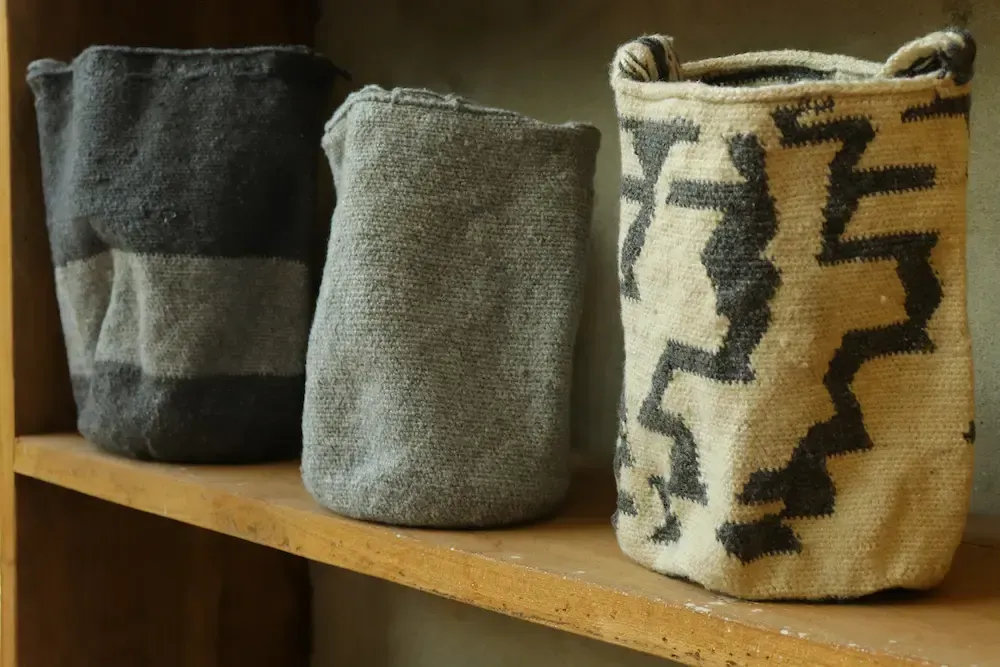
It took days.and It carries a much older story
The maguey
Wiwa mochilas are woven from maguey, the fiber that the Wiwa call Bi
She is not only material. She is a spiritual being
Maguey does not give up its fiber easily. The plant irritates the skin, and it is the men who know how to work with her. They cut it, clean it, and draw out the fiber. The women spin it and weave it. A mochila passes through both sets of hands before it reaches yours.
According to Wiwa oral tradition, the maguey has a powerful origin. In the beginning, she was a dangerous young girl. Her fluids, even her saliva, could make people severely ill. No one wanted to be near her, and her parents kept her safe at home.
One day a boy came and asked her to come outside and play. She hesitated, but he insisted and promised her parents he would keep her safe. After giving her some advice, they allowed her to go.
The girl became the plant. Her skin still turns away the hands that reach for her, and it is the men who know how to draw out the fiber. They bring it out. The women spin it and weave it. A mochila passes through both before it reaches yours.
This is why the elders say, "Don't throw away the strands. Take care of the maguey." She exists to care for the family, to safeguard the sacred preparations of the mamos, and to hold what matters. She is considered part of the family.
This story was shared with me by a Kukushamo, a teacher of the Wiwa community, when Bridgepath purchased its first fifty mochilas in 2019. He gave permission for it to be told.
Weaving is a ritual
Before weaving begins, the weaver makes an offering to the maguey, Abu bʉnshi.
Using her without asking permission saddens her guardians.
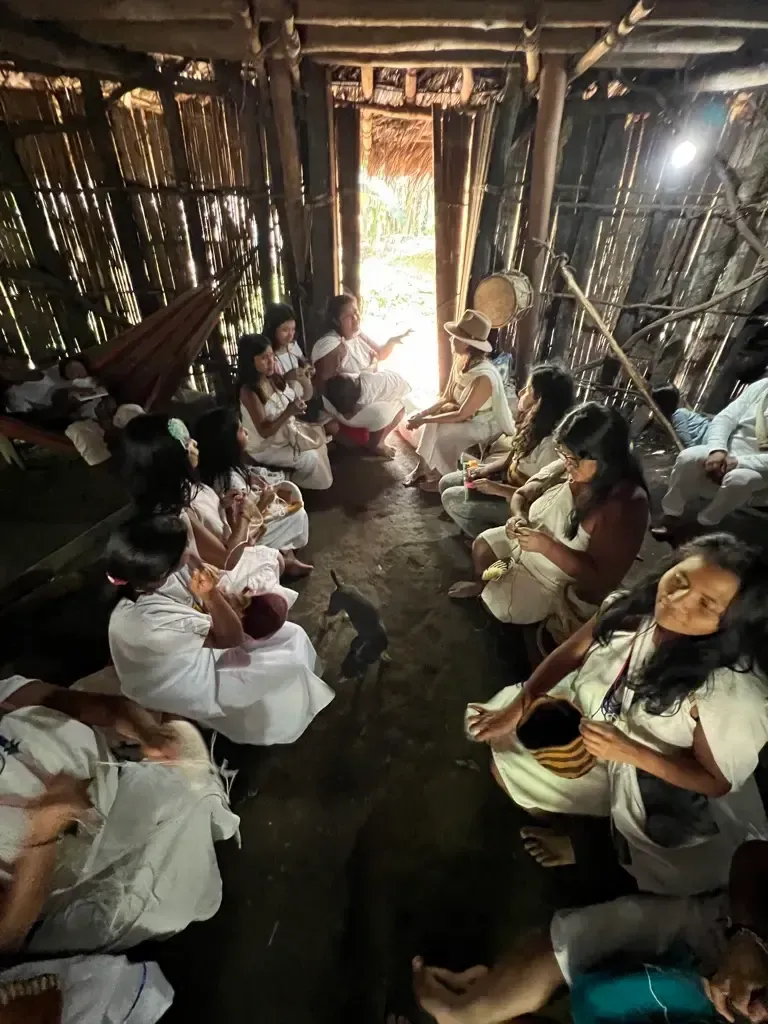
Women weave with love, patience, and ancestral knowledge, carrying their lived experience into each stitch. The lines and figures in a mochila hold the weaver's thoughts. No two are the same, because no two lives are.
As the elders say:
"When weaving, you must concentrate on the good life and weave with love. She is a spiritual being. Weaving heals us. It brings us together. She contributes by carrying vegetables, coffee, and trade. Weaving enriches our path to knowledge."
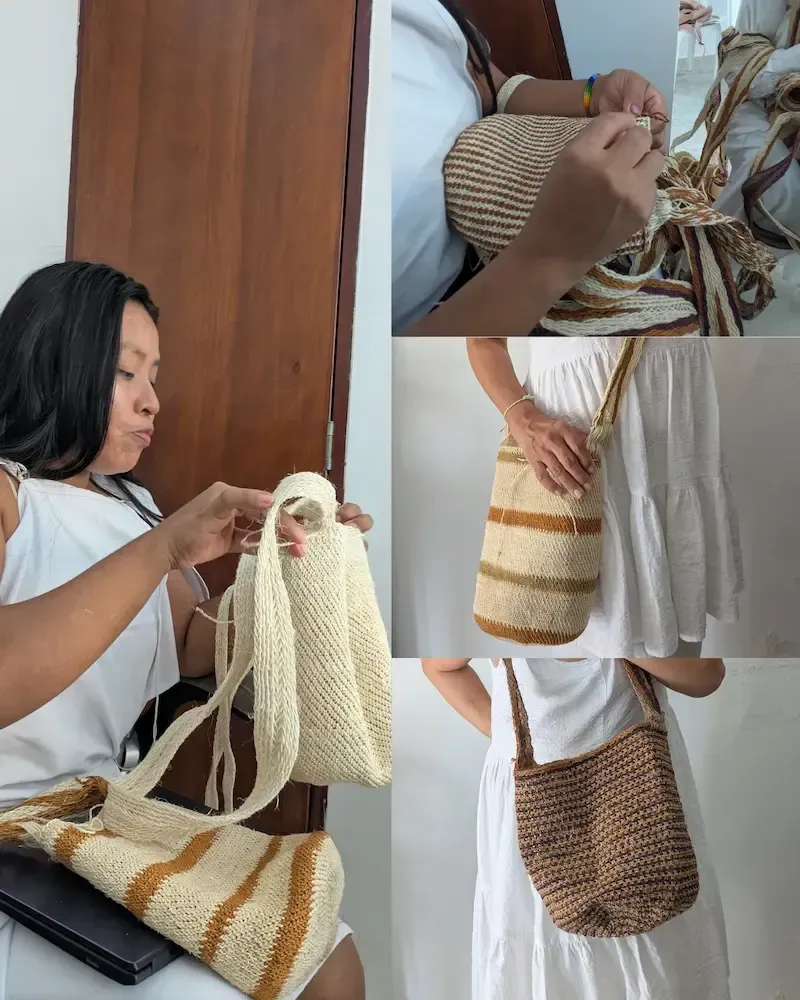
How a Wiwa Mochila is made
Everything is done by hand
The men cut the maguey. The leaf is laid on a board and scraped with a makana, a tool made from wild cane, to strip away the outer skin and reveal the cabuya fiber underneath. The fiber is spun into yarn by hand, or against the leg with a spindle called a carrumba.
The fiber is dyed with bark and stems from native trees, a knowledge refined over thousands of years. These techniques were passed down by Father Teyuna, guardian of the four sacred hills, who gave the boys and girls the sacred task of preserving and practicing them.
Sheep wool, cotton, and other natural fibers are also traditionally used.
The design of your Wiwa mochila
Each mochila carries symbols drawn from the Wiwa cosmovision: flora, fauna, the stories that hold the world in balance, and the community's own history.
The mochila holds life. Its origin, its journey, and its connection to the earth and the cosmos.
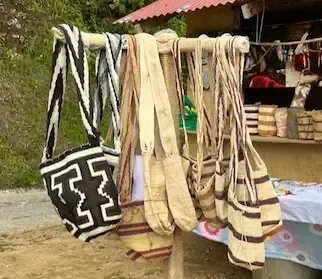
The design on the mochila you are holding, and what it means, is written on your tag
Why this matters
A mochila is not an accessory. As one Wiwa weaver puts it, with the mochila we are Indigenous; without it we are not.
Weaving carries identity, memory, and skill from one generation to the next. It is made from what the land gives, with methods that take nothing the land cannot replace.
Every mochila that finds a home somewhere else is a thread that remains unbroken here.
What a Wiwa mochila carry
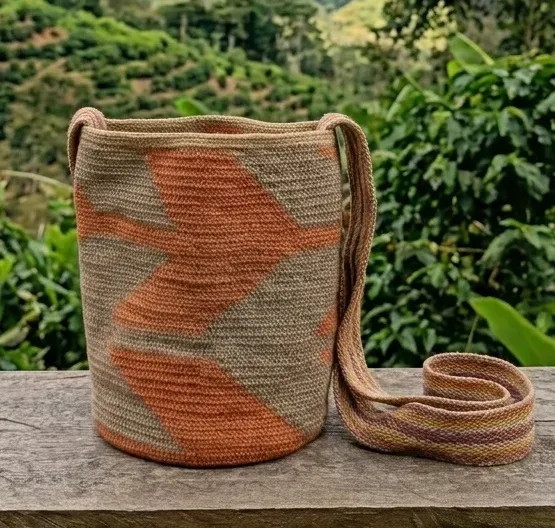
Woven by: Marta Gil
The Rama represents the Zema
It is the sacred meeting house of the four communities of the Sierra Nevada.
A place of protection, listening, and reflection. Woven into this mochila, it is an invitation to carry that stillness with you
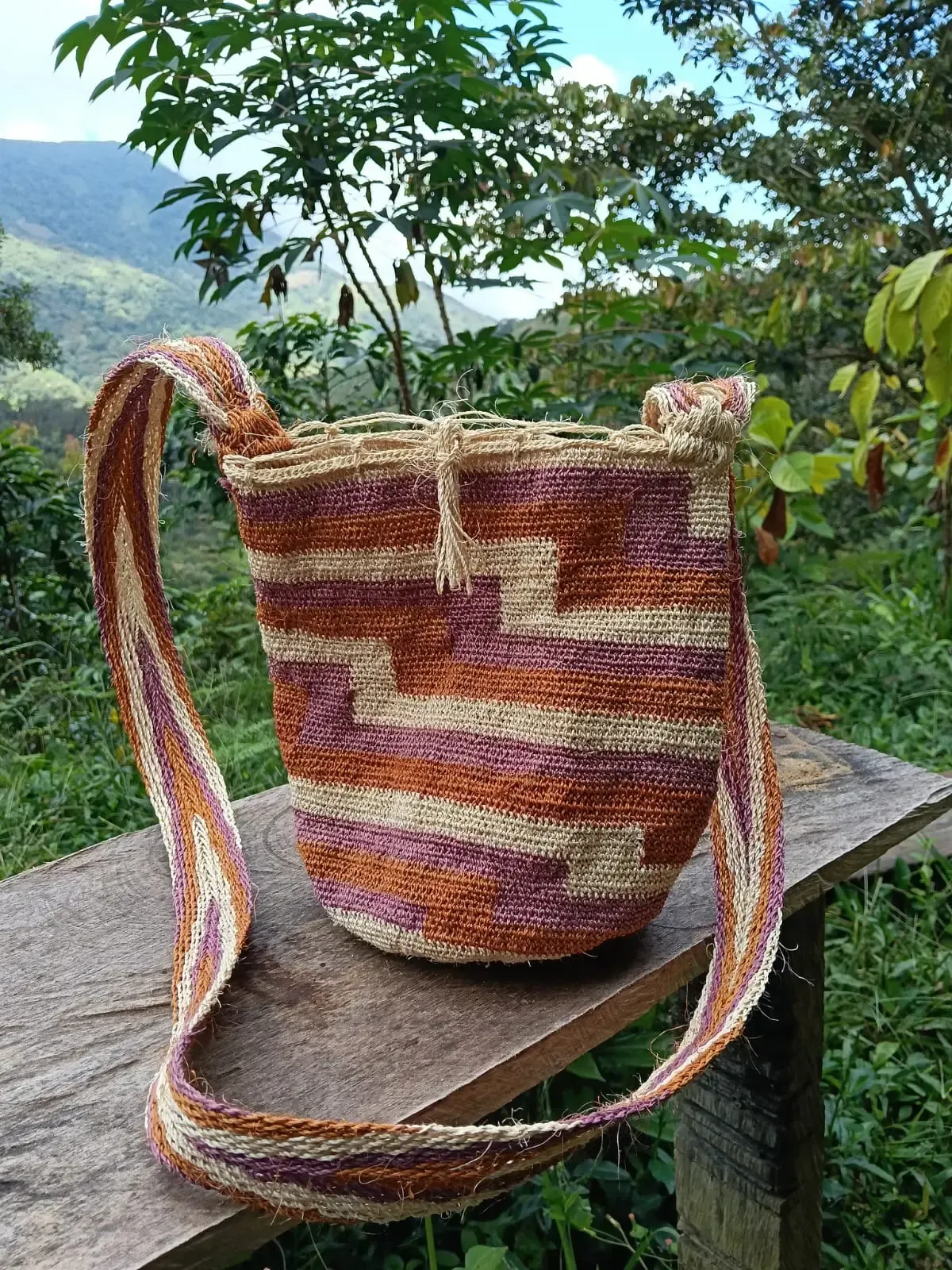
Woven by: Bunkuamake Woman
Camino represents the path of life
Rising always, one level at a time. The weaver who traced this figure understood something about the long climb and wove it into every thread.
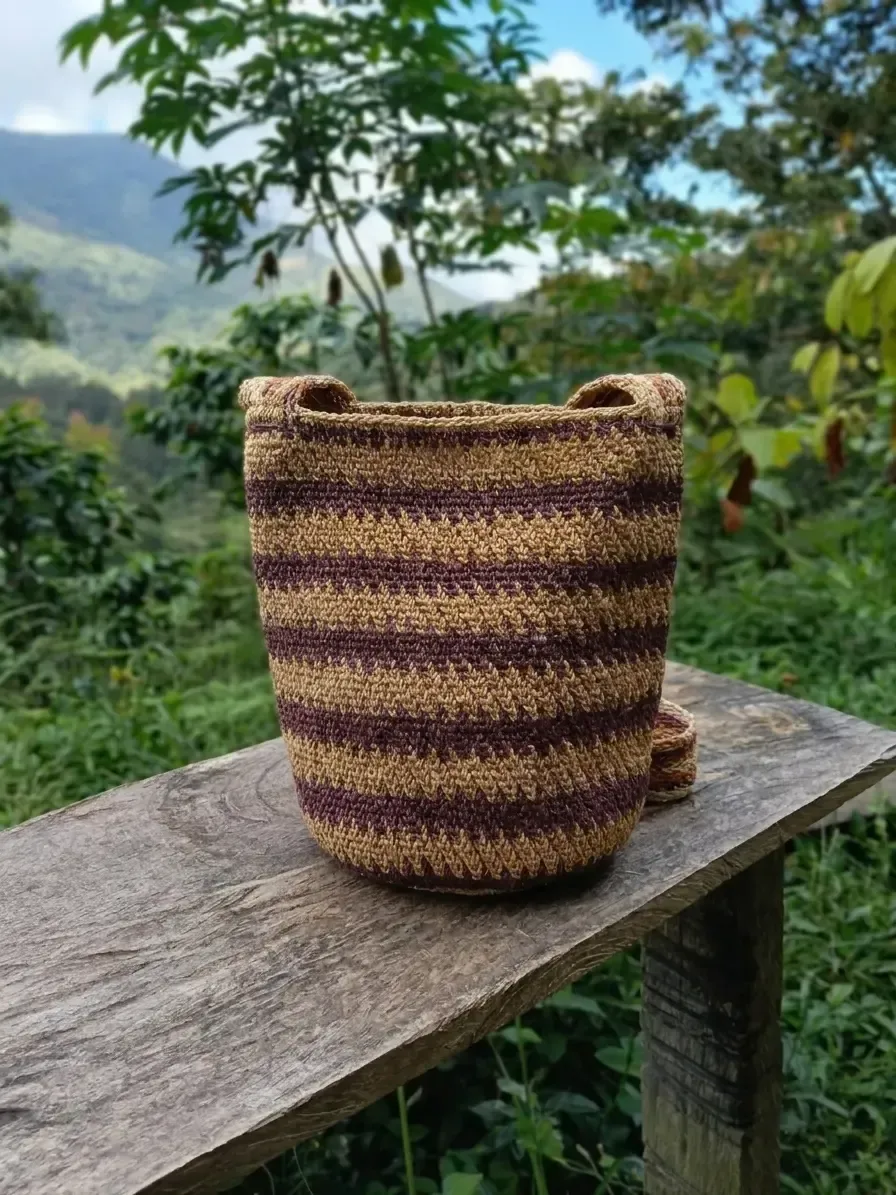
Woven by:Maria Paticia - Bunkuamake
Cascada represents the waterfall.
Water is sacred in Wiwa tradition, sung to, offered to, cared for as a living being.
This mochila was woven by a woman displaced from her land. Her hands remembered the rivers she can no longer walk beside.
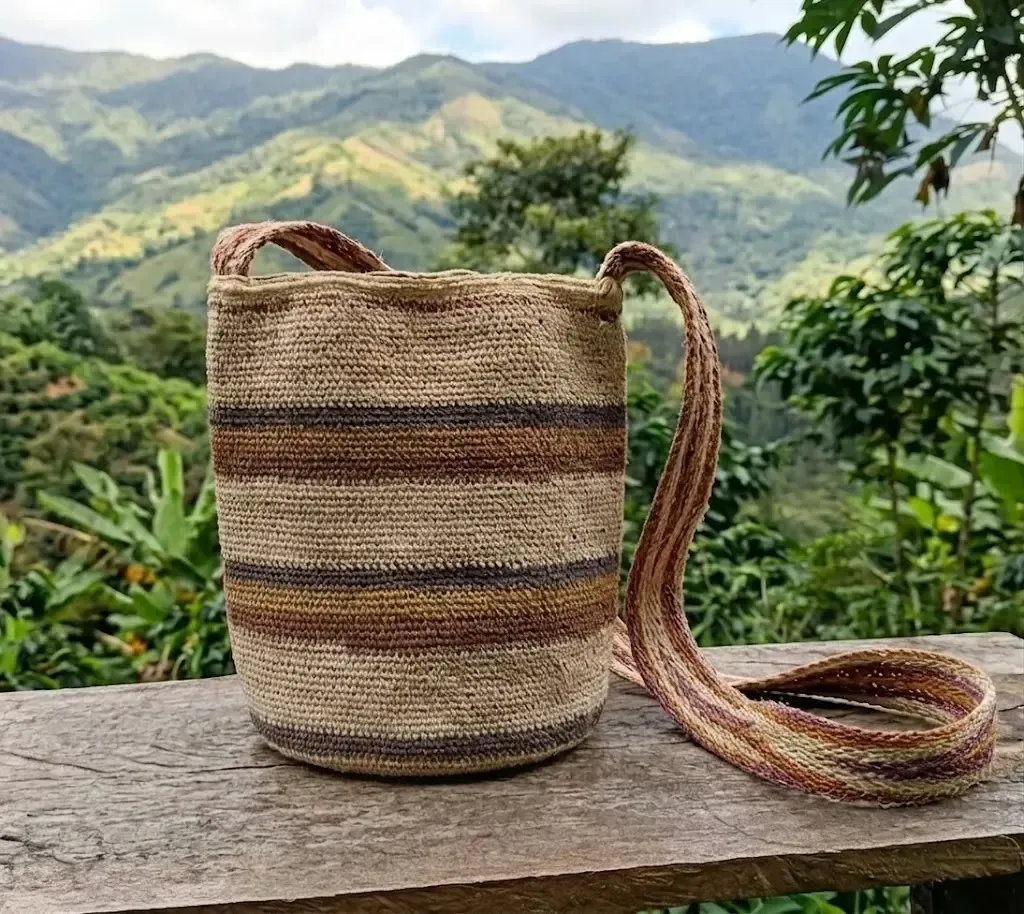
Woven by: Yuli Wiwake
The layers of the Earth
This mochila represents each level that holds what came before.
In Wiwa cosmovision, the Earth is not a surface. She is depth, living and sacred.
Wiwa mochilas are available in three sizes
Small · $95 · Medium · $115 · Large · $145
Each is handwoven in the Sierra Nevada de Santa Marta. 44% of every sale reaches the weaver directly, it is paid when she delivers. Prices were revised in 2026 following tariff and exchange rate shifts.
Where your reciprocity goes
Here are the complete numbers, not a summary.
A small mochila sells for $95, of that price:
The weaver receives 130,000 Colombian pesos. She sets that amount, and she is paid when she delivers the mochila, not when someone buys it. She buys her own maguey, and the price she sets accounts for it. That is close to 44% of the sale price.
Marta Gil receives 30,000 pesos per mochila. Marta coordinates the work in the territory: she brings the weavers together, checks the quality, and moves the mochilas down from the Sierra. That work is real and it is paid.
15% covers shipping from Colombia, the 12.5% tariff the United States currently applies to Colombian goods, and customs clearance. That cost rose this year, and that is why the price rose.
7% covers the card that comes with each mochila and payment processing.
24% stays with the Wiwa Women's Economic Sovereignty Program and funds micro-grants, materials, and training for new weavers.
On a large mochila the weaver receives 190,000 pesos and Marta receives 40,000.
About this partnership with the Wiwa women
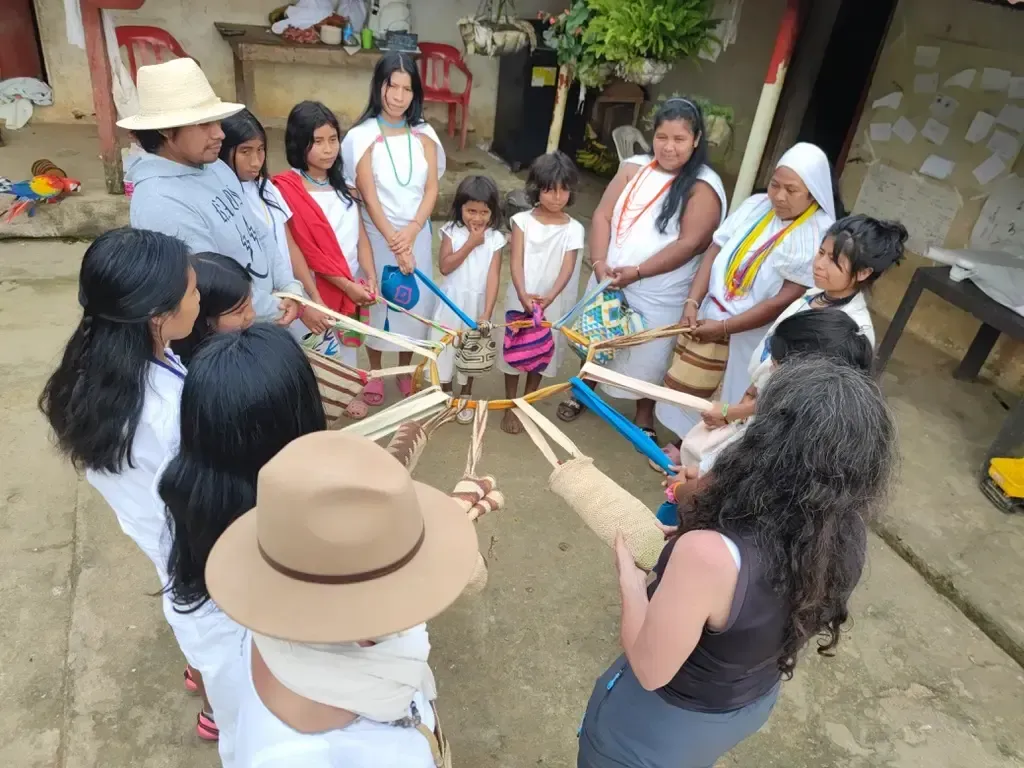
Bridgepath Foundation has walked alongside the Wiwa women of Bunkuamake and Wimake since 2025. The work began with an invitation from the women themselves, and it has continued on their terms.
It started with time in the Sierra. Bridgepath traveled to both communities, sat with the women, and asked what was needed rather than arriving with a plan. What came out of that was practical: materials, a market, and payment that does not wait on a sale.
Since then, Bridgepath has provided maguey, plants for natural dyeing, and the pots and colanders the dyeing requires. Some of that material made it possible for women in Bunkuamake and Wimake to work with natural dyes for the first time. The knowledge was there. The plants, the tools, and the time were not. Bridgepath also built and maintains wiwaart.com, so the work has somewhere to be seen and bought.
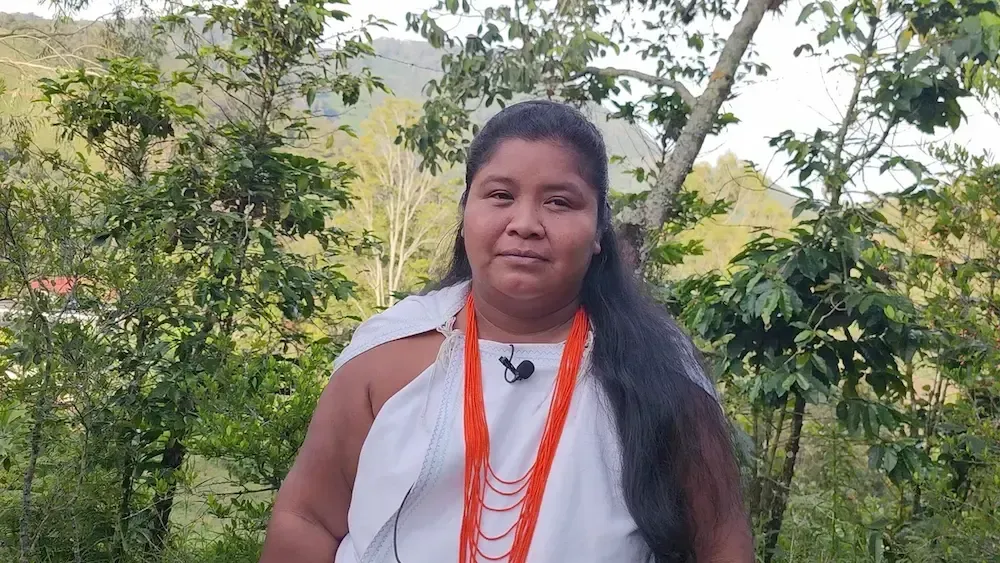
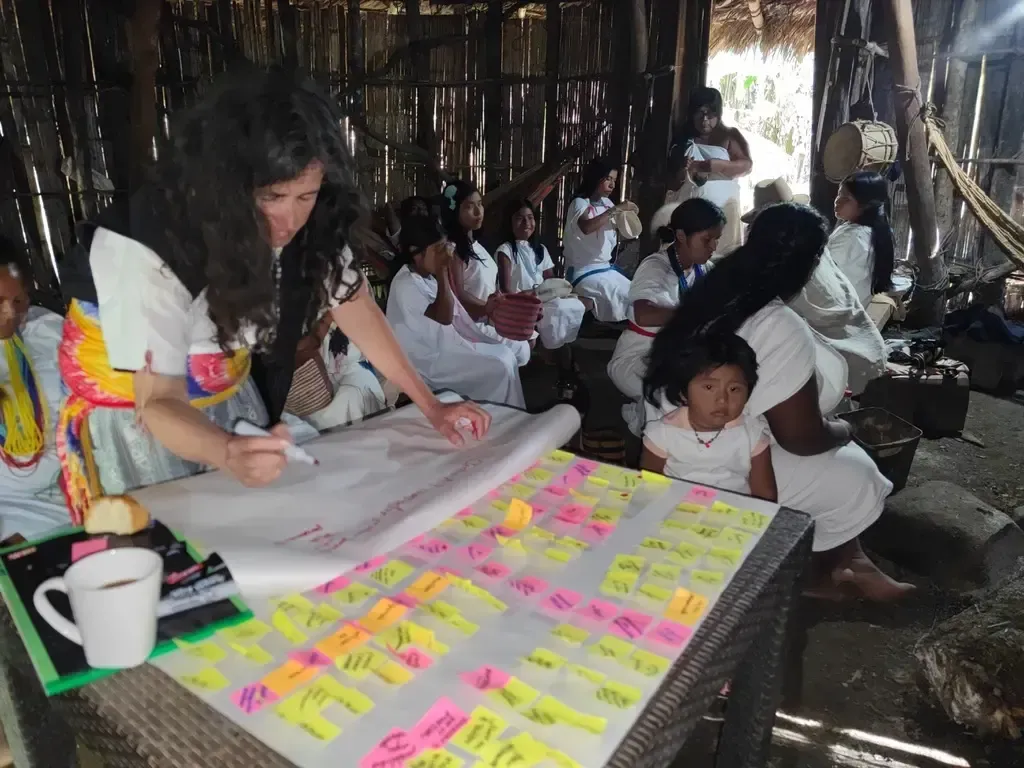
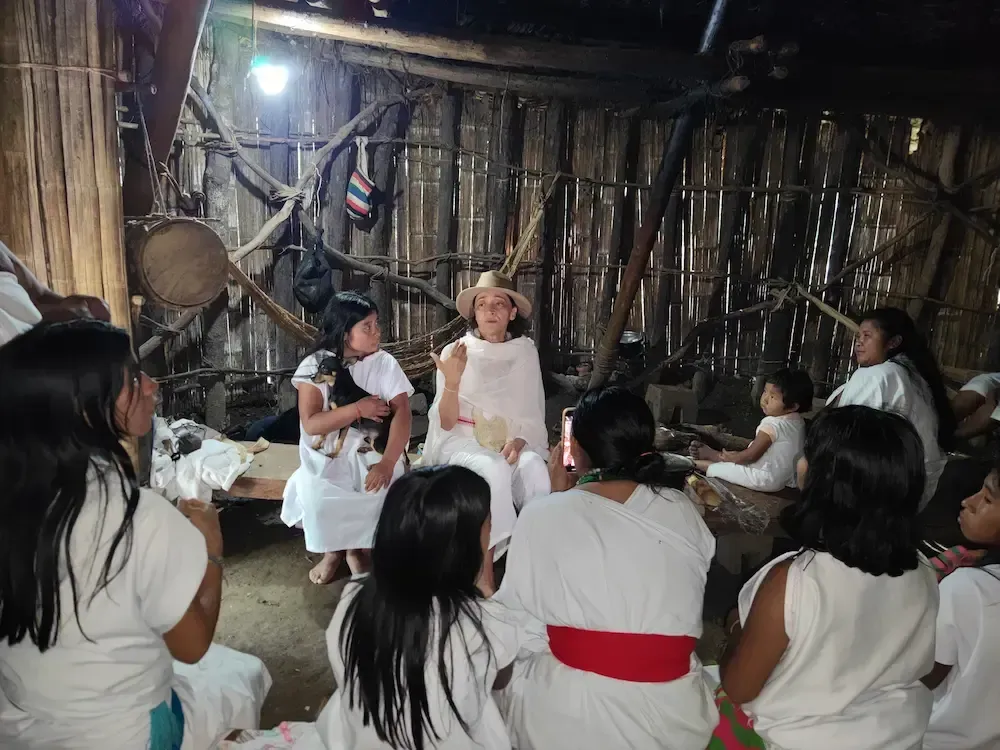
Marta Gil leads the work in the territory. She brings the weavers together, holds the standard for the work, sources materials, and sets what each piece is worth. Bridgepath buys, ships, sells, and reports back. That division is deliberate and it does not move.
The weaver buys her own maguey, and the price she sets accounts for it. Bridgepath has donated 150 pounds of maguey to the women of the Wiwa Women's Economic Sovereignty Program, which is a way to ease the cost, not a substitute for it. What we are working toward with the community is planting, growing, and harvesting the maguey ourselves.
The commitment is economic sovereignty. Weaving is already how these women carry knowledge from one generation to the next, and it is already how many of them hold a household together. What was missing was a way to reach buyers who would pay what the work is actually worth.
A Wiwa mochila is not a product with a story attached to it. The lines and figures a woman weaves carry her own thinking. That is why the weaver's name belongs on the tag, and why we ask permission before we say anything about what a design means.
Alongside the weaving, Bridgepath makes direct micro-grants to Wiwa women building their own livelihoods, including a poultry project that anchors the community's seed and food sovereignty work. Bridgepath also partners with Biblioteca SE, where the women have given two public talks and demonstrations of their own work. Reaching a market matters. So does being the one who speaks about the work.
A healing that goes beyond you
Monthly stories from the Sierra Nevada and from individuals finding their way back to self.
No spam, just what matters.
Bridgepath Foundation is a registered 501(c)(3) nonprofit
Philadelphia, Pennsylvania
Serving individuals and communities globally

Bridging Mind, Body, Spirit, and Earth

